You’ve finally reached the end of the day. You’re tired, everyone has needed something, and you want a little comfort.
Something sweet sounds good.
But afterward, instead of feeling satisfied, you’re frustrated with yourself. You might be saying to yourself, “Why can’t I get this under control? Tomorrow, I’ll do better.”
When I switched to a plant-based diet back in 2015, I thought I’d have to give up so many things that I loved, like chocolate and sweets. But I didn’t.
If all this sounds familiar, my guess is that you don’t want another list of foods you “should” eat – that’s not what you’re looking for. You need a way to care for your changing body (thanks, hormones!) and still find room on your plate for pleasure.
How to Close the Gap Between Knowing and Doing
A recent Hackensack Meridian Health article highlights nutrition during perimenopause and menopause, recommending a plant-centered, whole-food, high-fiber eating pattern that includes beans, soy foods, leafy greens, nuts, and whole grains. It also emphasizes that nutrition is one big part of care, alongside exercise and, when appropriate, medication.
That’s useful guidance. But there’s a gap between reading “eat more whole foods” and deciding what to reach for when you’re worn out and craving something sweet.
Leave that gap unaddressed, and every difficult evening can become another reason to doubt yourself. You might swing between strict rules and “I’ve already blown it”—spending more energy negotiating with food than enjoying it.
The goal isn’t to become someone who never wants dessert. That’s willpower and it never lasts. Instead, stop treating dessert as a test and instead treat it as a way to still nourish yourself while enjoying the flavors you love. The best way to do that is to know what ingredients to use for foods that promote health, and putting that into action. Out with the old and in with the new way of eating.
Plant-Based Desserts Can Be Healthy and Delicious
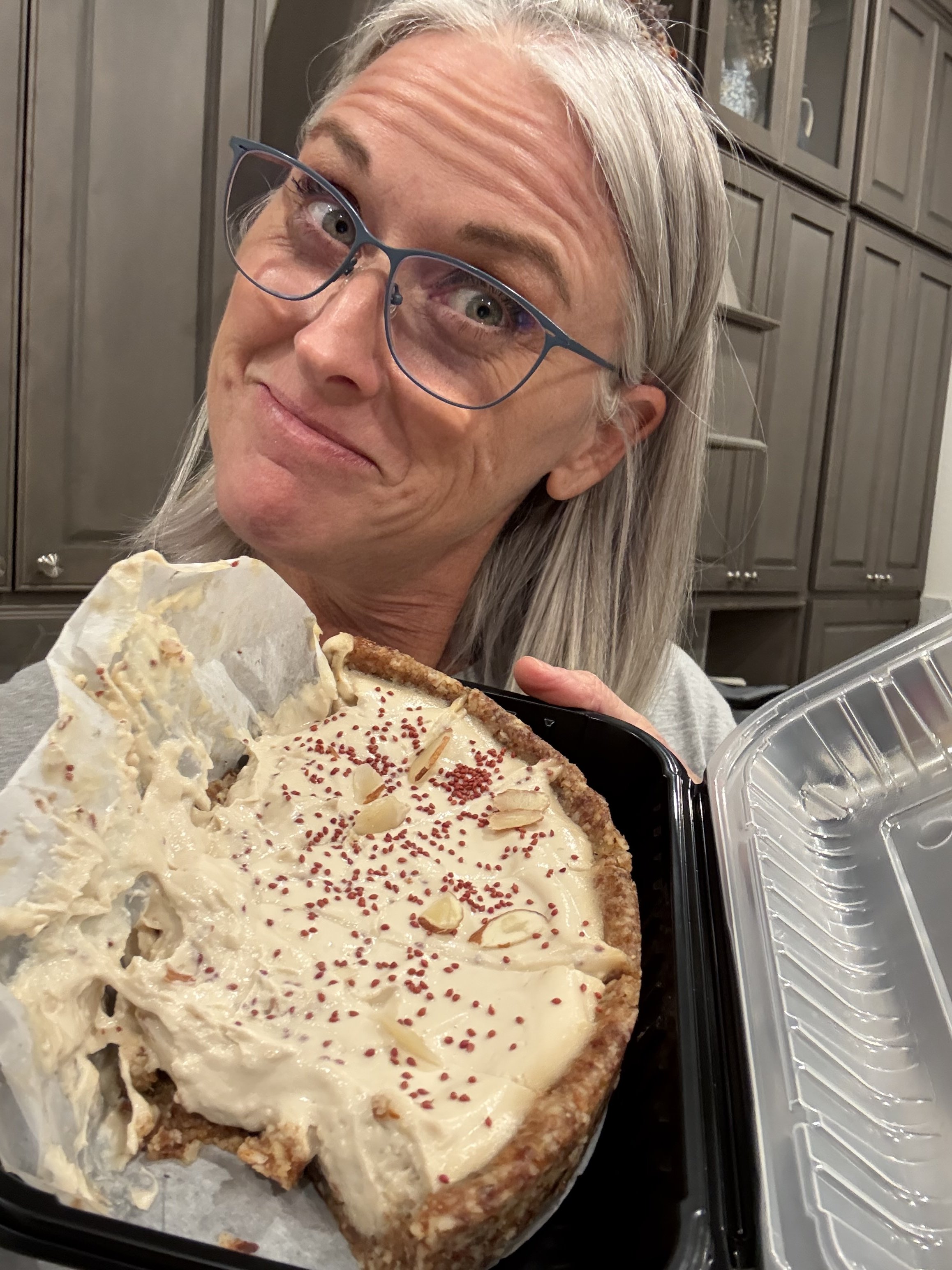
< That is all that was left after “Pie Day” at my husband’s work! He took the Fresh Berry Tart with Almond Date Crust. Looks a little gooey after the drive home in a warm car, but it sure looks like it was a hit!
Coach Tip: Set A Healthy Mindset of Curiosity
As a health coach, I help women turn good intentions into choices that fit their lives. That starts with understanding what’s happening, not judging it.
Before reaching for something sweet, pause and ask yourself:
Am I hungry and needing something more substantial?
Am I thirsty? (thirst often disguises itself as hunger)
Am I looking for rest, routine, or emotional comfort?
Do I simply want dessert—and what would feel satisfying?
How do I want to feel about myself tomorrow, and what do I need to do to make that happen?
What is something I can commit to today that will help me succeed?
More than one question can be at play, and more than one answer can be true. Be honest with yourself – that’s where positive change starts to happen and real results are closer than they’ve been before.
By doing this self-questioning exercise, you’re gathering information so you can respond with intention instead of automatically reaching, regretting, and starting over.

Satisfy Your Curiosity With Community & resources
Maybe taking a plant-based cooking class or finding a trusted resource will help turn your curiosity into action in your own home.
Make the Next Choice Easier
In my Second Youth Wellness Method digital program, one of the Healthy Habit Builders is to set yourself up for success by creating an environment that makes the healthy choice the easier choice. In other words, reduce temptations, increase healthful options.
Start small:
1. Choose a plant-centered dessert you genuinely want to try.
2. Be prepared. Make it before life’s busy-ness takes over.
3. Enjoy it, then notice what you liked and what you would change.
4. Adjust or repeat and build from there.
This isn’t about finding a “perfect” dessert that fixes menopause or makes cravings disappear. It’s about practicing a different pattern: planning for enjoyment instead of relying on restriction.
You deserve support that helps you nourish yourself without turning food into another source of pressure.
Enjoy Something Sweet Without Starting Over All The Time
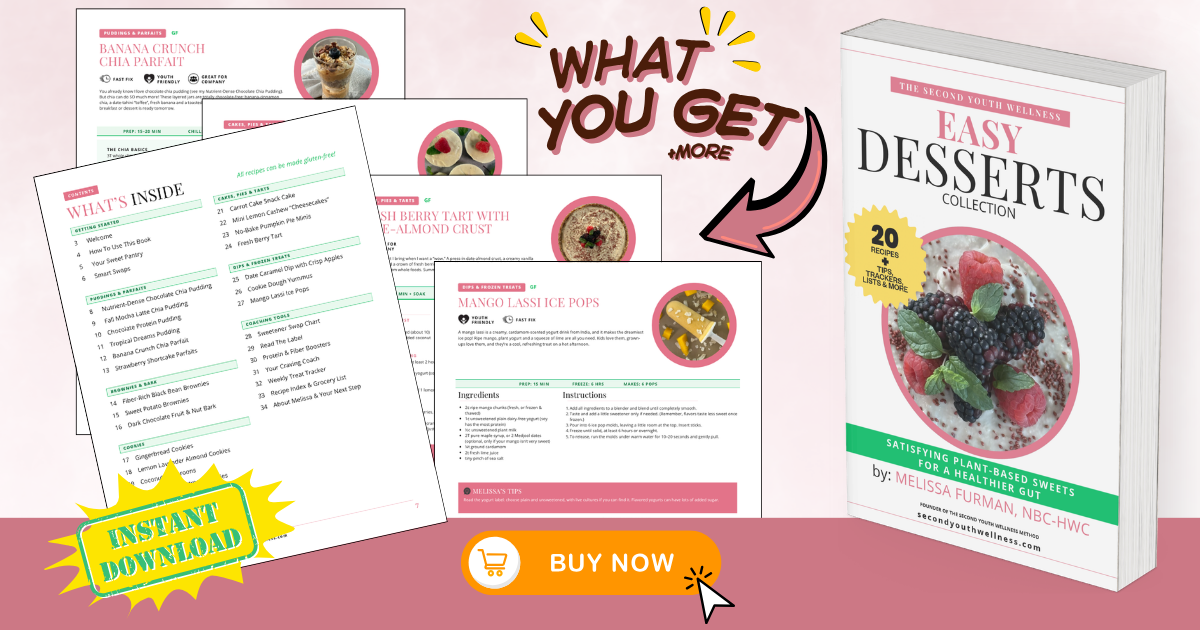
My desserts e-cookbook is a great place to begin exploring plant-centered sweets, made with whole foods, not fake ingredients.
Choose one recipe that sounds delicious and give it a place in your week. Let it be a first step toward enjoying dessert with more intention, less second-guessing, and no promise to “be good” tomorrow.
Work With Your Medical Provider
If menopause symptoms are disrupting daily life, talk with your health care provider. Food and health coaching sessions can support your care, but they don’t replace medical evaluation or treatment that might include hormone replacement therapy or other modalities.
Reference
Hackensack Meridian Health. (2026, November 6). What to eat during perimenopause and menopause. https://www.hackensackmeridianhealth.org/en/healthier-you/2026/11/06/what-to-eat-during-perimenopause-and-menopause