The Motivation Myth: Why "willpower" isn’t the problem (and how to increase motivation to be healthy)
How to increase motivation to be healthy
The age-old question of “why can’t I motivate myself to be healthy” haunts us all in one season or another. The next question that comes to mind in this vast digital age is, “Who or what should I believe for what’s healthiest?” And then, “Where should I start?” You just want to know how to increase motivation to be healthy, but these are questions you may be asking yourself. Trying to live healthy can be overwhelming and confusing.
I’m going to help you not just increase your motivation but know how to get to the root of living well by using a few coaching strategies too - it’s like getting a FREE mini coaching session, just because you’re reading this article!
I could give you a checklist like so many well-intentioned others do, but that’s not going to help because lists never last.
What will help is understanding what’s underneath the changes you want and then applying key strategies so you can live the healthy life you want for years to come!
“We all want to live well. To increase your motivation to be healthy, you must first define your personal “why” vs. relying on willpower. Then set small and achievable goals. Finally, track your progress and adjust. That’s the step that’s often left off most people’s health journies.”
We are all seekers of a "Second Youth”
To get that "second youth" feeling and true well-being, it takes consistent action over time using the right tools, and oftentimes, additional support for sustainable results.
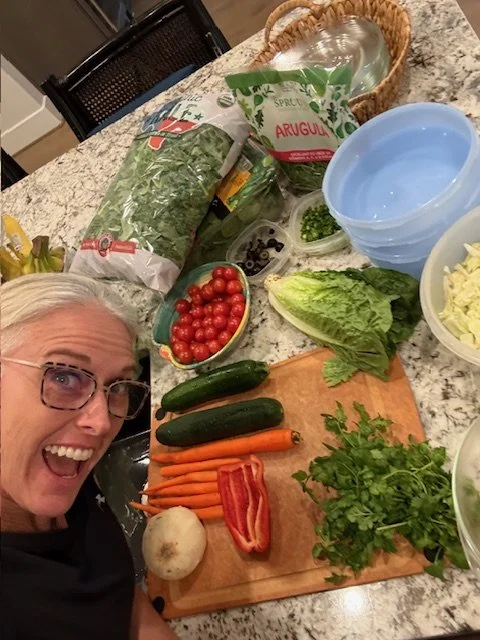
Wellness is not served on a silver platter.
To get that "second youth" feeling and true well-being, it takes consistent action over time using the right tools, and oftentimes, additional support for sustainable results.
If there ever was a Fountain Of Youth, we would have found it by now. But strive we must to look and feel young as long as we can, sometimes at a high price. If you’re like me, we seek youth. Not to be vain or immortal, but so that we can live a good quality of life and enjoy time spent with loved ones.
The problem you might be experiencing is that you want to feel young and be healthy, but can’t seem to stop the roller coaster of dieting, food restrictions, or even medical interventions.
You want that "Second Youth" feeling—the one where your body doesn’t ache when you wake up, and your mind doesn’t feel like it’s wading through a thick fog by 2PM making you long for a nap. You want to feel at home in your skin again, to feel young and alive, not achy, tired and hopeless.
First, let’s put aside willpower and rely on underlying strategies that work.
Find your underlying “Why” - because willpower doesn’t last
Willpower is good for short-term things (like not ordering the dessert at dinner or stopping what you really want to say in a heated discussion), not long-term behavior changes.
We can try to rely on willpower to follow doctor orders or a new routine, but that only lasts for a short bit, and then it tanks. Willpower can get us some results for a short bit, making us feel like we’re having success. But when willpower runs out, we feel like failures (again). I know. I’ve been there (you can read more about my story here).
First, find your “why” behind wanting to change.
Why do you want to lose weight? Why do you want to feel energized all day? Why do you want to exercise? Why do you want to know how to cook healthy?
Your “why” might be to play with grandkids, to be happy with who you see in the mirror, or to protect your independence in later years.
How to find your “why”
To find your “Why,” engage in deep self-reflection by asking questions about yourself. This might involve past experiences, core values or passions. It also may include discovering the deeply meaningful people in your life, whom you long to love and be with.
You can find your “Why” by just brainstorming, but oftentimes journaling is helpful, as seeing the written word is more impactful.
Whatever it is for you, write it down. There may be several “why” reasons. Write them down, share them with a trusted someone and post them so that you can be reminded of them frequently.
Writing your “why” down serves as a foundational target that informs your daily decisions and choices. If you want to buy the cake at the grocery store, remembering your “why” that’s top of mind will help you pass it by and get the strawberries instead. Knowing your “why” can help you get to the gym more often because you remember that you want to be stronger so you can stay in your own home longer and not have to pay for physical therapy.
Once you have your “why” in mind, and written down, start taking action with goal setting. But not just any goal setting.
Set goals. Don’t set unrealistic expectations of perfectionism
To start, clearly identify your reasons for wanting to be healthier - that’s your “why” that we just talked about. For example, your reasons for wanting to be healthier may be: wanting more energy, better disease prevention or to get off medications.
Set what we in the coaching and business worlds call SMART Goals. I bet you've heard of them before, so to review...
SMART goals take a big goal and breaks it down into smaller, intentional baby steps that are easier and more achievable. Click the triangle bullet points for more details.
Click each section to view the specifics:
-
Identify what you want to achieve. If you want to feel better, that’s not specific enough. Instead, identify how you want to feel better. An example might be that you want to feel capable of exercising again. Or maybe your specific goal is to be skilled at plant-based cooking.
-
If you want to lose weight, that’s not specific enough. Identify how much you want to lose. 15 pounds? That’s specific. If you want to gain energy, which is good but vague, change that part of your SMART goal to feeling energized enough all day to not need an afternoon nap at least 6 out of 7 days. With measurable goals, you can, for example, measure pounds or frequency.
-
If you want to lose 50 pounds by next month, that’s most likely not achievable. Instead, set a goal of losing 50 pounds by a date set further out, or better yet, set a smaller goal for a shorter timeframe. If you want to become better at cooking at home, set an achievable goal of making 1 new recipe a week instead of changing everything all at once which is overwhelming. Achievable goals are bite-sized.
-
If you want to lose 50 pounds by next month, that’s most likely not achievable. Instead, set a goal of losing 50 pounds by a date set further out, or better yet, set a smaller goal for a shorter timeframe. If you want to become better at cooking at home, set an achievable goal of making 1 new recipe a week instead of changing everything all at once which is overwhelming. Achievable goals are bite-sized.
-
How will you know if you get to your goal? First set a measurable goal and then set a time to achieve it. If you want to eat plant-based breakfasts every day, then start with once a week and build up from there. The time-bound part comes when you set mini goals (once weekly) to the bigger goal of having a plant-based breakfast every morning in 6 months time.
Just like your “why,” write down your SMART goals. When you write down SMART goals, you help yourself from relying on willpower alone and prevent yourself from two common obstacles: wanting to “fix” yourself and feeling inadequate.
Please remember, nobody this side of Heaven is perfect. So give yourself grace. SMART goals are there to help you but also meant to be adjusted as needed.
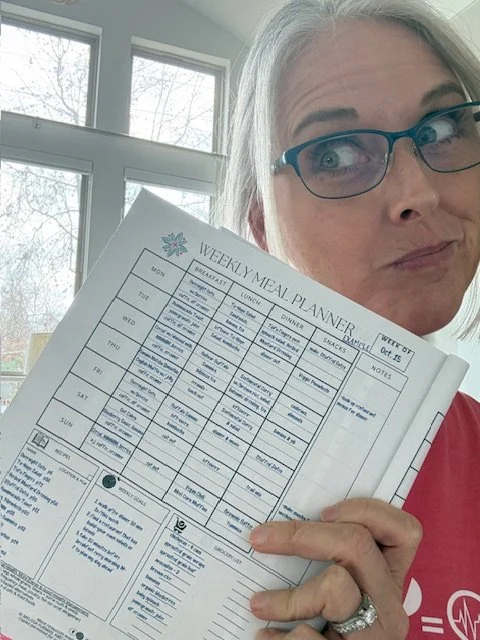
Increase your motivation to be healthy by writing down goals & action steps.
Many people like to write down their goals. Seeing them in ink helps them stay on track.
Take it to the next level. Write down action steps, like in this weekly meal planner from my cookbook.
Or try using a good ol’ spiral planner like this one that I use year after year after year!
Just like directions on a road trip, writing things down ahead of time helps you stay on track, not have to re-think all the time, and gives you clear steps to take.
Give yourself grace. Around here at Second Youth Wellness, it's about progress, not perfection!
Caveat: Don’t get stuck in the "Righting Reflex"
Life is messy. We might feel motivated for positive behavior changes until something comes up that throws us off course. Work is stressful. You’re exhausted. The kids got sick. YOU got sick. That vibrant version of you feels miles away, and suddenly, those old habits—the easy, comforting ones—wiggle back into your routine.
The "villain" here isn't a lack of discipline or motivation. It’s actually something much sneakier.
In the world of health coaching, we call it the "Righting Reflex." We want to fix ourselves. Or let others fix us. We want a checklist of things, and people to tell us what exactly is wrong with us and what to do.
The Righting Reflex is the internal voice, or many times the external voices, that tells you exactly what’s "wrong" with you and tries to "fix" it with a list of “shoulds."
“I should eat better (but what’s healthy?). I should exercise more. I should be more motivated.”
“You should eat XYZ. You should take this supplement. You should just do this certain exercise.”
Apply positive psychology strategies
What’s the problem here? As William Miller andStephen Rollnick, the founders of Motivational Interviewing (MI), point out: when we focus on what we should do, we often trigger ambivalence. We want to change, but we also want to stay the same. There’s a tension and resistance. Ambivalence creates an internal tug-of-war that drains your energy before you even lace up your shoes or make the plant-based meal.
It’s not motivation that’s lacking. It’s thinking we’re broken and need to be fixed.
Well-trained health coaches and counselors help clients using positive psychology based motivational interviewing techniques that help clients overcome ambivalence by exploring internal motivation (the “why” behind it all) and existing capabilities or preferences that can help them change their behaviors to sustainable ones that support their goals.
If you ever want some extra support to help you find your “why” and set achievable goals, then contact me for support! I will help you stop being frustrated and start achieving successes!
Your plan: shift from "have to" to "want to” using your “why”
To get to your Second Youth, let’s change the conversation you’re having with yourself. Let’s use strategies rooted in Motivational Interviewing.
Instead of directing you, let’s evoke your own wisdom. Let’s bring out your strengths and capabilities.
So, ask yourself thoughtful questions to bring forth the answers you’ll need.
Ask yourself: What does health look like to me? Why does it matter now?What does my healthy future look like?
4 Strategies for your health journey
To help you work through those questions, here is a blueprint for lasting change (click each option for more info):
-
We’ve already talked about this a bit. Stop trying to "fix" yourself. You’re not broken. And it’s not your fault. Start listening to your needs and discover sustainable ways you can work on them. Then, get the necessary tools you need for success.
-
Look at where you are and where you want to be. Not with judgment, but with curiosity. Then you’ll have a clearer picture of how you need to close that gap. Be honest with yourself here.
-
When you don't feel like cooking that plant-based meal, don't fight it. Ask, "What is this feeling telling me? What’s getting in the way of me making a plant-healthy meal? How can I make healthy food choices easier for me? What needs to change in order for me to be able to succeed?”
Resistance tells us a lot. If you feel annoyed when making the new plant-based recipe, reflect. Is it because it’s different, hard to do or unfamiliar? If it’s hard, what would make it easier? Getting new equipment or stocking up on a few of the new ingredients? If it’s a dislike of an ingredient (many say they don’t like tofu or broccoli), try making a different recipe without that ingredient in it, or give yourself permission to just try the new flavors.
When you work through resistance, then reflect on what just happened, it will help you to keep going! If it was a good experience, repeat it! If it was not, then adjust and try again.
Identifying the resistance you experience is half the battle. Finding a positive way to roll with it is the other half. Work through resistance — it’s better than giving up, like willpower has us do. Remember: identify resistance, adjust, move forward, reflect and try again!
In the Second Youth Wellness Method course, we call this “overcoming obstacles.” Roll with resistance, and discover ways you can overcome what’s holding you back. -
Use the positive approach. What strengths do you have that you can rely on to achieve your health goals? If you are naturally creative, how can you use that creativity to make nutrient-dense cooking a positive experience rather than a chore? If you’re adventurous, discover food or activities that will satisfy your adventurous spirit. If you are athletic, what exercise can you do, or work towards, that you enjoy? If you are socially driven, find a like-minded group of people who you can share your health journey with.
Start small, then work your way up. Rome wasn’t built in a day, nor was it built perfectly (I’m assuming here). Neither are behavior changes and good health. Stop trying to fix yourself. Determine where you want to go from where you are, roll with speed bumps in the road, and use your strengths to experience success.
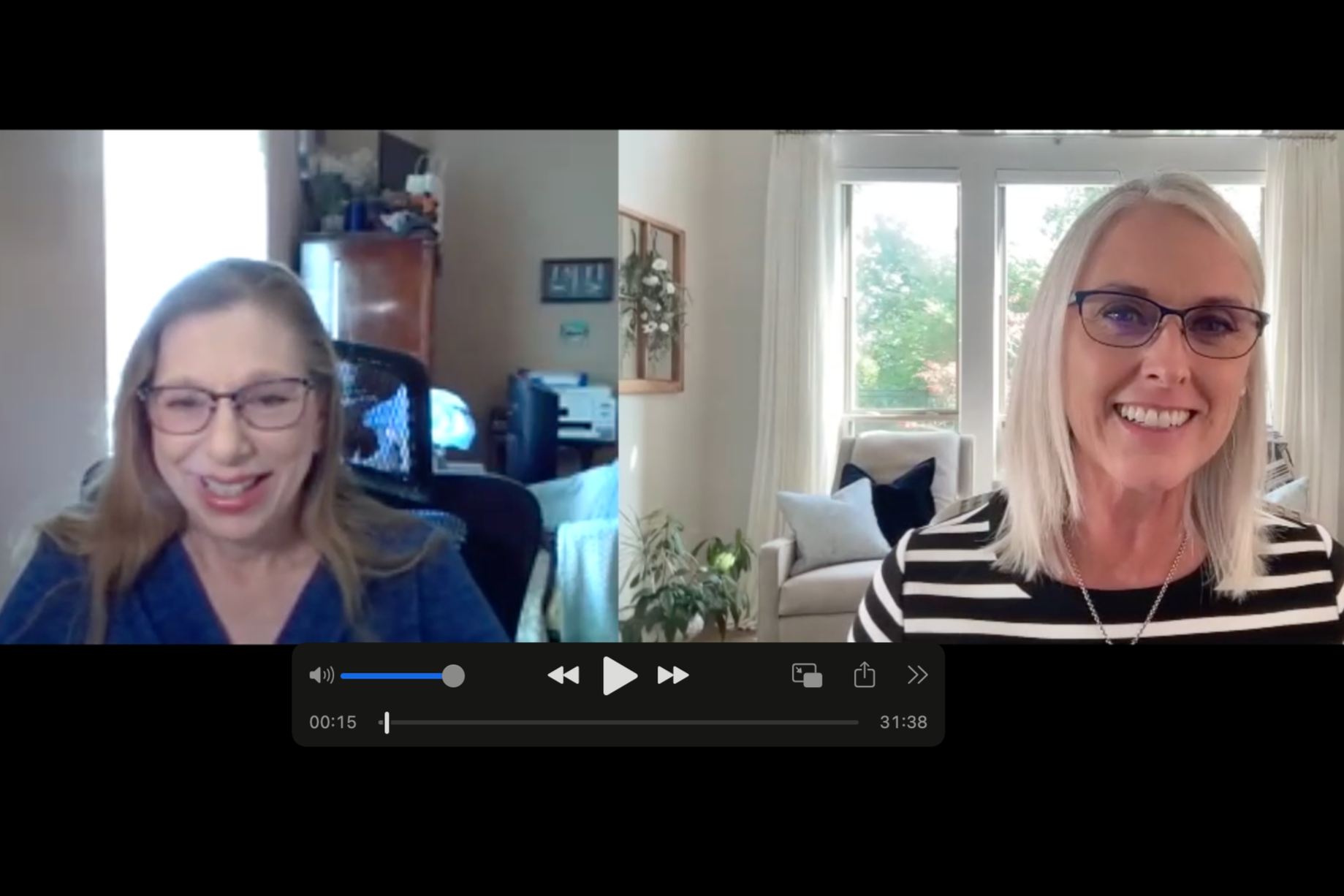
Capitalize on your strengths with a trusted partner.
Get a support partner. Get an advocate who has your best interests at heart. Engage someone who knows the journey you're on and who will offer support instead of resistance. That is KEY to longevity and quality of life.
The Second Youth Wellness course, products and coaching, are here to help you thrive! Your health is our only focus - to help you live your healthiest life today and for years to come.
Track progress along life’s messy roads
The road to wellness and your second youth isn't a straight line; it’s a series of small, intentional pivots. And it might be messy with trials and try-agains. That’s OK! You don't need more willpower. You’re not broken. You need to know your “why,” have intentional goals and track progress.
In the Second Youth Wellness Method program and in my cookbook, I provide tools to help you achieve success. There are meal planners, a Food, Activity & Mood tracker, food journals and others. These tools are there to help you be organized, plan ahead, ‘see’ what’s happening and adjust where necessary.
If things are not working, shift to something else. If it is working, keep doing it to keep making progress and build from there.
If we don’t write things down, it’s hard to know where to pivot or what to continue. Tracking tools help.
Get Organized
One of the BEST things in my life is my planner. Well, when it comes to organizing my life, this is certainly tops.
I've used this exact planner for years! In the world of Goldie Locks, it's "just right." I like the 8.5" x 11" size that gives me plenty of space to write my tasks, appointments and meetings, plus I have room to add extra notes and write down my meal plans! I'm almost embarrassed to say I've spent over $65 for planners similar to this one, and this MUCH cheaper version does the same job!
Commitment is a choice. Motivation is a feeling.
As a health coach, I invite you to stop waiting for "perfect" motivation to strike. Motivation is a feeling, and feelings are fickle. Commitment, however, is a choice rooted in your deepest values that you can discover through finding your “why,” writing down goals and tracking your experiences.
The question shouldn’t be around how to increase motivation through willpower or miracle solutions. The question should revolve around digging deep inside yourself and taking action.
Are you ready to stop "trying" to be healthy through mere motivation and start becoming the person who naturally makes healthy choices and enjoys the fruits of her efforts? Of course you are!
Stay stuck or live more freely
If we stay stuck in the "shoulds" we stay stuck in the cycle of burnout and self-blame. We continue to feel older than our years, watching our vitality slip away because we’re too busy fighting ourselves, and watching with jealousy how others seem to have all the answers (hint: they don’t).
But if we embrace this integrative, strengths-based approach to multi-faceted well-being, you can reclaim health. By doing so, you’ll show up for your family and work with more presence. Rediscover the joys of wellness and discover what it’s like to live in your “second youth.”
Enjoy the journey: Health is consistent practice, not a destination
When you align your actions with your values rooted in your “why” — change stops feeling like a battle and starts feeling like a homecoming. Then you’re not beating yourself up wondering how to increase motivation and get in shape (or healthy, or off meds, or better blood pressure).
I invite you to nurture the most important asset you have: your health. Enjoying the journey because you’re worth the investment.
At Second Youth Wellness, we believe your best years aren't behind you—they are waiting to be reclaimed.
Are you ready to dive deeper? Let’s start the conversation - contact us today and take the next best step for sustainable wellness!
💚 Melissa
xoxo