2 Fundamentals For A Successful Health Journey
2 Fundamentals For A Successful Health Journey
When it comes to a woman’s midlife health journey, most don’t fail because they’re lazy. They struggle because they’re missing two simple fundamentals that make every other health decision easier: a clear WHY and a framework that actually fits real life. [1]
If you’re in your 40s, 50s, or 60s and are looking for healthy aging habits for women over 50, this article will help!
You already know that your body has changed. You may be seeing weight gain, an expanding waistline, low energy, hair and skin changes, gut issues, or new diagnoses like type 2 diabetes, heart disease, or high blood pressure, or even just feeling blasé. Sure, hormones change as we age, but there’s a whole lot else going on that we can have control of that will affect our success rate on our individual health journey.
You’ve probably tried to address these changes with exercise programs, shakes, point-counting, intermittent fasting, “clean” eating, hormone replacement therapy (which can be very good by the way!), or even weight loss drugs and the latest fad diet. [1]
For a while, something works…until it doesn’t.
Then the cycle starts: hope, hustle, short-term results, exhaustion, frustration, and back to old habits.
The problem isn’t you. The problem is the missing fundamentals.
Stop blaming yourself, and start setting yourself up for success.
In this article, you’ll learn two simple but powerful fundamentals for a successful health journey—plus how taking one small step, like bringing more simple whole-food meals into your kitchen, can help you finally move from “I’ve tried everything” to “I can actually do this.”
Fundamental #1: Your Long-Range WHY
When I meet with a new coaching client, I don’t start with calories or step counts. I start with one question:
“What is your long-term WHY for living healthfully?”
Without a clear WHY, even the best plan will eventually drift.
You can collect all kinds of information, ideas, and goals, but if there isn’t a “true north” guiding your daily decisions, it’s easy to lose momentum, slide back into old patterns, and feel like you’re starting over again (and again and again).
I know how this feels. In my early 40s, I had tried several diet protocols and even extreme exercise programs. They worked a little bit, but is was HARD to sustain. And as soon as I got off the program or food, the weight and bloating came roaring back. What I’m sharing with you here, is what I needed back then. I started putting these 2 key fundamentals into place in 2015, and have been doing it ever since, sharing them with clients and now you!
What Is Your WHY?
Your WHY is the deeper reason you want your health to change—not just a number on the scale, but what that number would allow you to do.
Common long-range WHYs sound like:
“I want to be fully present with my grandkids—on the floor, at the park, at their games.”
“I want to keep working in a way that feels purposeful, not just surviving the workday.”
“I want to enjoy time with my spouse and friends—traveling, serving, laughing, not sitting on the sidelines.”
“I want to feel good in my own skin and have energy for the things God is calling me to.”
Ask yourself:
Where do I want to be in 1, 5, or 10 years?
Who do I want to be with?
What do I want to be able to do physically, mentally, and spiritually?
How do I want to feel when I wake up in the morning?
What will I be able to do that I enjoy?
This is your long-range WHY.
Short-Term WHY vs. Long-Range WHY
A lot of women get stuck because they choose a short-term WHY:
“I need to lose weight before the reunion.”
“I want to fit into this dress for the wedding.”
“I have a beach trip coming up; I have to slim down fast.”
Short-term WHYs can create a burst of motivation, but they rarely lead to lasting change. After the event is over, the old patterns usually slide back in.
A long-range WHY looks like:
“I want strong joints so I can travel and explore new places in retirement”
“I want stable blood sugar so I can avoid complications, pricey medications and doctor visits.”
“I want to support my heart health and maintain my independent living so I can enjoy a long, enjoyable life.”
A long-range WHY changes how you see your daily choices.
Suddenly, what you eat, how you move, and how you manage stress are no longer random tasks—they’re bricks you’re laying on a path that leads to the life you truly want.
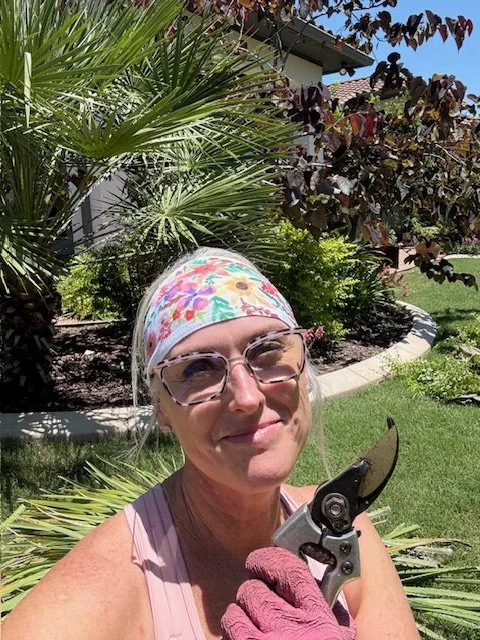
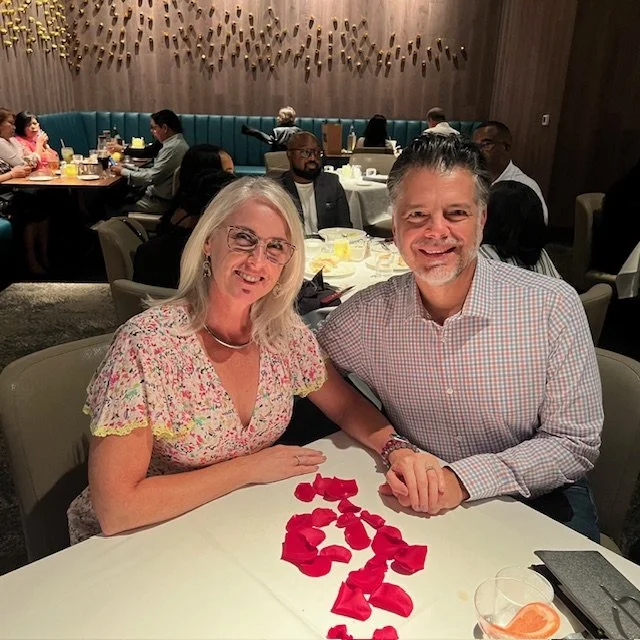
“Your habits lay down bricks on a path that leads to the life you want in midlife and beyond. In my coaching practice, I call these “Healthy Habit Builders” — they build on each other in meaningful ways for true well-being.”
Your identity matters
There’s one more piece that quietly shapes every health choice you make: Your Identity Matters
It’s what you call yourself.
If you regularly think, “I’m just lazy,” “I’m a sugar addict,” or “I always fall off the wagon,” your brain treats those labels like instructions.
Over time, we tend to live up (or down) to the identities we repeat to ourselves. When you silently agree with those negative labels, it becomes easier to prove them true with your actions.
But the opposite is also true.
When you begin to see yourself as a woman who cares for her body, honors her God-given life, and is capable of change—even in midlife—your choices start to line up with that identity. You don’t have to “flip a switch” overnight. You simply begin to act like the kind of woman you want to become, one small step at a time.
You might start to call yourself:
“I am a woman who is learning to nourish her body.”
“I am someone who shows up for her future self.”
“I am a learner, not a failure—I’m figuring out what works for my midlife body.”
“I am strong to do hard things, that will eventually become muscle memory and easier.”
Notice the difference between:
“I’m a mess. I always quit.”
-versus-“I’m in a season of growth. I’m practicing new habits by trusting the process and with God’s help.”
The labels you choose are like seeds. If you settle for “I’m just unhealthy” or “I’m too old to change,” you’re planting a story that keeps you stuck and makes it easier to give up. If you start choosing identities like “I’m becoming a healthier, stronger, more energized version of myself,” you plant a story that invites hope, courage, and action.
What you repeatedly tell yourself is, in and of itself, a habit.
“We are what we repeatedly do. Excellence, then, is not an act, but a habit.”
This is where the stakes are real: if you keep rehearsing negative identities, it becomes easier to live into them. If you begin, even quietly, to name your future healthiest self and claim that identity, you give your brain and your body something better to grow toward.
As your coach and guide, part of my work is helping you notice the old labels you’ve carried and gently replace them with true, life-giving ones that support your long-range WHY—not sabotage it.
healthy aging habits for women over 50: Every Bite Is a Brick
Everyone is paving a path—toward wellness or toward illness. You are building that path one choice at a time. In my online course, the Second Youth Wellness Method, I list many specific bricks and call them “Healthy Habit Builders.” In theory, this is how they work:
Every bite is a brick.
Every walk is a brick.
Every night of sleep you protect is a brick.
Your long-range WHY gives you a reason to choose bricks that lead toward health, not away from it.
My Healthy Habit Builders follow along the 6 Pillars of Lifestyle Medicine: Healthful Nutrition, Movement, Stress Management, Sleep, Social Connection, Avoidance of Risky Substances.
In my coaching practice, I use a shorter list of pillars, which is easier to remember: Plants, Habits, Mindset, and that leads to Freedom.
Fundamental #2: A Target and a Framework That Fits You
Once your WHY is clear, you need two more pieces:
A target (your WHERE)
A framework (your HOW)
Clarify Your Target (Your WHERE)
You have your WHY in mind. Now ask:
“Where do I actually want to go with my health?”
Your target gives your WHY a direction.
Examples of targets:
“I want to lose 20 pounds in a steady, sustainable way.”
“I want my doctor to safely reduce or discontinue one of my medications.”
“I want to be able to work in the garden comfortably and walk around the park without getting winded.”
“I want to maintain my independence and keep living in my own home.”
“I want to feel clear-headed and focused through my workday.”
Your target doesn’t have to be perfect. It just needs to be specific enough that you know whether you’re moving closer or farther away. And so you’ll know when you get there!
The Right Framework Matters
Most women don’t miss their health goals because they lack information. They miss them because they don’t have a framework—a structure that turns knowledge into daily, sustainable habits.
Without a framework, your health journey can feel like:
A paper airplane on random wind currents, hoping to land somewhere good
Climbing a ladder that’s leaned against the wrong wall
Trying to assemble furniture without an instruction manual and ending up with “mystery pieces”
A framework is your map. It helps you know what to do first, second, and next—without guessing.
The wrong framework feels like:
All-or-nothing rules
Constant restriction and punishment
“Good” and “bad” days instead of a steady, flexible pattern
Quick fixes that ignore your age, hormones, and rhythm of real life
The right framework:
Respects your midlife body and changing hormones
Centers around whole, real foods that support energy, digestion, and long-term health
Breaks change into small, doable steps
Builds habits in a realistic manner so you don’t feel overwhelmed
Provides qualified support to help you get through valleys and over hurdles without backsliding
Why Trying “Random Things” Keeps You Stuck
You can use effort and willpower like a ladder—but if it’s propped against the wrong wall, you’ll work hard and still end up somewhere you didn’t mean to go. You get somewhere due to effort but oftentimes it’s somewhere you don’t intend.
It’s not that you haven’t tried hard enough. It’s that you haven’t had a framework designed for this season of life, your values, and your real schedule.
You must use the right kind of ladder and prop it against the right kind of wall to get to the place you intend.
How a Health Coach Guide Helps You Use These Fundamentals
You might be thinking, “Okay, I get the WHY and the framework. But I’ve tried to do this on my own before.”
That’s where having an expert guide can change everything.
As a National Board Certified Health & Wellness Coach and master certified health coach who has eaten a whole food, plant-based lifestyle since 2015, I help midlife women turn good intentions into daily habits they can actually live with.
Health and wellness coaching has growing evidence that it can improve health behaviors like nutrition, physical activity, and stress management, and can support quality of life for adults with chronic conditions. Having a qualified health coach is clinically effective on many levels of well-being.[2]
This “coach approach” is collaborative, honors your autonomy, and focuses on your values and goals—not a one-size-fits-all plan.
Instead of telling you what to do and judging you when you can’t keep up, I partner with you to:
Clarify your long-range WHY and your specific targets
Design a step-by-step plan that fits your life, your faith, and your health priorities
Create small, realistic action steps and experiment with what works in your real world
Provide evidence-based information so you have fundamental understanding and build confidence in what you’re doing for your health, instead of just checking off a list of to-do items.
You are not lazy or broken. Your brain and hormones are simply doing their job in a changing season of life, and with the right tools, qualified support, and effective framework, you can build new habits that are meaningful to your health and that last.
Start Simply: Bring the Framework into Your Kitchen
One of the easiest places to practice these fundamentals is in your kitchen.
Whole, plant-centered meals can support healthy weight, improve markers like blood pressure and cholesterol, and help you feel more energized in midlife and beyond. Research suggests that shifting toward more whole plant foods is associated with reduced risk of chronic lifestyle diseases, especially when combined with other healthy habits like movement, sleep, and stress management.[3]
That’s exactly why I created my cookbook: to give you delicious, simple, approachable recipes that fit a whole food, plant-forward framework—without overwhelm.
When you open the cookbook, you’re not just getting recipes. You’re getting:
Ready-made ideas that align with your long-range WHY
Meals that support your targets (like better energy, digestion, and blood sugar)
A practical way to start building the framework we’ve been talking about—one meal at a time
Buying the cookbook is not “just another thing to try.” It’s one small, concrete step toward a clearer path.
Closing Thoughts: Your WHY, WHERE, and HOW
Your health truly is your wealth. Healthy aging does not have to be a long list of failed attempts.
Remember:
Your WHY is your reason.
Your WHERE is your target.
Your HOW is the framework you follow.
To have a successful health journey, ask yourself:
How can I make changes today that support my long-range WHY?
What am I willing to do today, in a small and repeatable way, to move closer to that life?
What framework—and whose support—will help me actually get there?
You don’t have to waste more time, money, and energy on things that don’t work. You can start today, with what’s in front of you, and build a path of choices that leads to the life you want in midlife and beyond.
Action Steps You Can Take Today
Here are 3 simple steps you can start right now:
Write your long-range WHY. In one sentence, describe the life you want your health to support (for example, “I want to be active and independent so I can travel with my husband and keep up with my grandkids in retirement.”). Tell it to someone you trust. Then put it where you’ll see it every day as a reminder of your target.
Choose one “brick” for your next meal. Decide on one small nutritious upgrade for either today’s lunch or dinner: adding an extra serving of vegetables, swapping a processed snack for fruit and nuts, cooking without fatty oils, or choosing a hearty plant-based main dish. Then build on more bricks as you go.
Take one small step: get the cookbook. If you’re ready for an easy way to bring this framework into your kitchen, order my cookbook and choose one recipe to make this week. Let that be your first brick on a clearer, more hopeful path to health.
Here’s to your health!
💚 Melissa
Share the love! ❤️
Copy the URL of this article and email it to someone who you think would benefit from it!
References:
Matthews, J. A., Matthews, S., Faries, M. D., & Wolever, R. Q. (2024). Supporting Sustainable Health Behavior Change: The Whole is Greater Than the Sum of Its Parts. Mayo Clinic proceedings. Innovations, quality & outcomes, 8(3), 263–275. https://doi.org/10.1016/j.mayocpiqo.2023.10.002; pmc.ncbi.nlm.nih
Gordon NF, Salmon RD, Wright BS, Faircloth GC, Reid KS, Gordon TL. Clinical Effectiveness of Lifestyle Health Coaching: Case Study of an Evidence-Based Program. Am J Lifestyle Med. 2016;11(2):153-166. Published 2016 Jul 7. doi:10.1177/1559827615592351; https://pmc.ncbi.nlm.nih.gov/articles/PMC6125027/
Almuntashiri SA, Alsubaie FF, Alotaybi M. Plant-Based Diets and Their Role in Preventive Medicine: A Systematic Review of Evidence-Based Insights for Reducing Disease Risk. Cureus. 2025;17(2):e78629. Published 2025 Feb 6. doi:10.7759/cureus.78629; https://pmc.ncbi.nlm.nih.gov/articles/PMC11890674/