Reading Food Labels With Confidence in Midlife
Walk through any grocery store and it’s easy to feel overwhelmed by boxes and bottles promising “healthy,” “natural” and “light.” Words like these on the front of packaging make us think the product is good for us. The article “What’s Actually Hiding In Your ‘Healthy’ Grocery Store Food” from May 2026 at The Daily Wire raises an important reminder: if we want to care for our bodies in midlife, we cannot take the front of the package at face value. As a women’s health coach, I teach clients that reading the backs of labels is an act of stewardship, not obsession—one small way we can honor the bodies God entrusted to us.
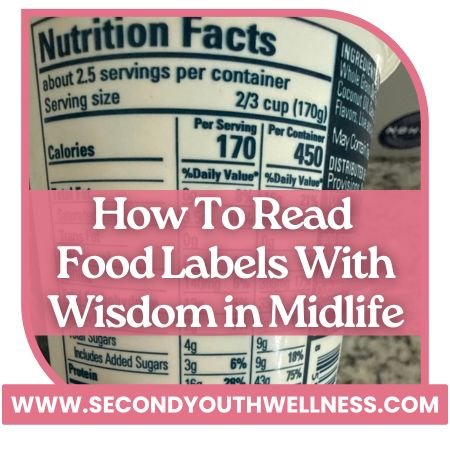
Read Food Labels
Take more control of your health by reading food labels and making informed, wise choices. Consistent healthy choices may lead to protecting illness from occurring (like inflammation-derived chronic illnesses) as well as reversing chronic illnesses that you may be experiencing already.
Shop smart: Read the facts, Don’t be persuaded by marketing
A simple step is always looking at the nutrition facts chart and ingredients list on the back of the package. Here are some quick-reference guidelines for discerning label reading while grocery shopping.
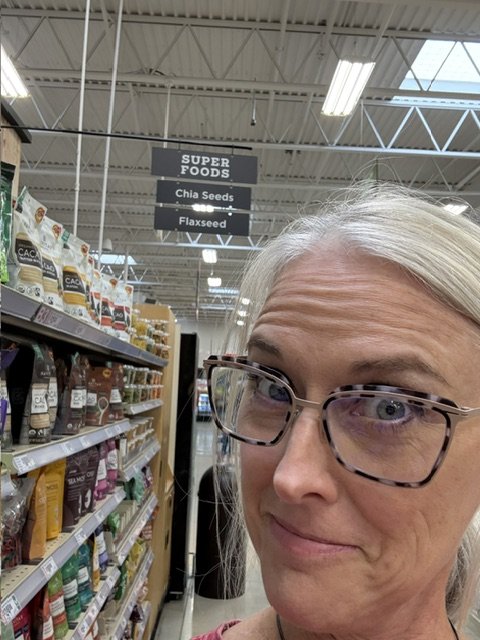
Shop Wisely
Manage midlife health and that of your family by grocery shopping wisely. Read the backs of food packaging and look at key ingredients and their amounts. Consistently choosing health-promoting foods over time makes a positive difference in overall health.
Read The Nutrition Facts Label: Start With serving size
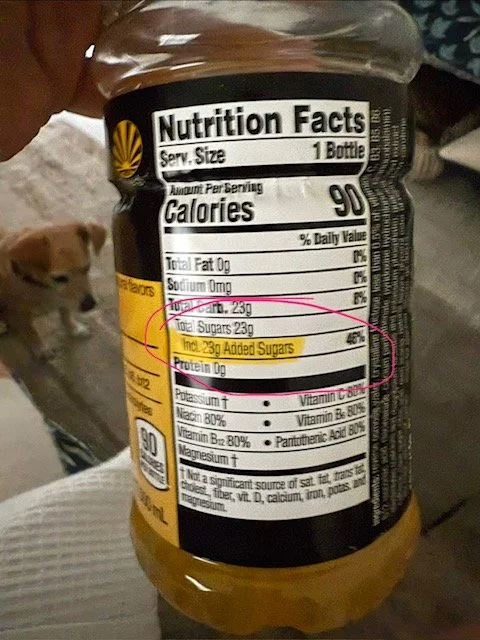
First, glance at the serving size. Many “healthy” products shrink the serving so the numbers look better, which means the saturated fat and added sugar you actually eat may be two or three times what the label shows.
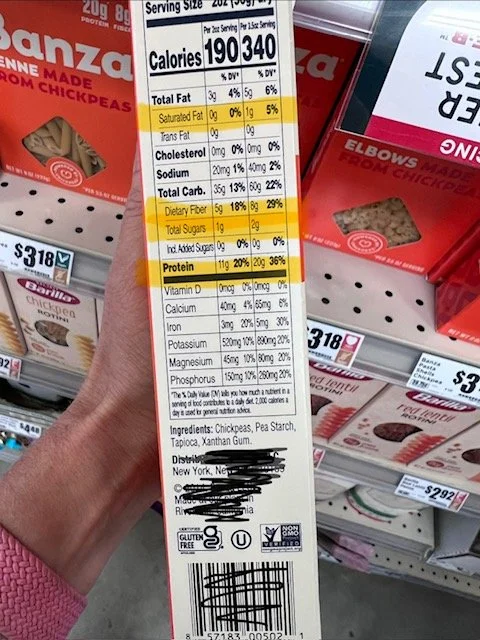
Look at Added Sugar and Saturated Fat content
When I coach midlife women, I encourage them to aim for saturated fat under 2–3 grams per serving and keep added sugar under about 5–6 grams per serving. Added sugars (the refined sugars vs. naturally occurring sugar in foods like fruits and dates) are what we try to stay away from. Instead, focus on selecting whole foods naturally sweetened with real whole fruit or a touch of natural, pure sweeteners like 100% pure maple syrup or 100% pure honey.
Fiber Is King
Fiber content is at the core of everything I work on with my clients. The average American only gets about 16g of fiber daily, as opposed to the generally recommended amount of 25 to 34 grams per day for men and 22 to 28 grams per day for women (Harvard Health). Fiber feeds the gut microbiome which fuels good health and helps fight disease rooted in systemic, chronic inflammation. When we don’t feed the good gut bacteria the fiber it needs, illness and inflammation may manifest in various forms such as arthritis, skin and hair issues, brain fog, gut cramping, immune system dysregulation and more.
Fiber is a huge topic and one that deserves a full discussion, so I’ll reserve specifics for another article and just leave it at that for today.
“When we don’t feed the good gut bacteria the fiber it needs, illness and inflammation may manifest in various forms such as arthritis, skin and hair issues, brain fog, gut cramping, immune system dysregulation and more. ”
Protein Content In Midlife
Protein matters, too, especially during and after menopause when we’re protecting muscle, bones, and energy. Research suggests that moderate protein intake in the range of roughly 0.8–1.2 grams per kilogram of ideal body weight supports good health. In my coaching, we easily hit that moderate target (of 0.8-1.0g/kg body weight) mostly with beans, lentils, tofu, tempeh, whole grains, nuts, and seeds.
As we age, we should increase protein intake to maintain muscle mass and bone health. That is easily done with a carefully planned plant-centric diet, and oftentimes by also adding a high-quality protein powder. We don’t have to turn every food decision into a math problem by counting each gram of protein–we can get plenty of plant protein to help us thrive with naturally occurring, whole plant foods. The key here is to center your dietary intake on high-fiber foods, and build in higher sources of plant protein sources at the same time.
The Ingredients List Tells So much
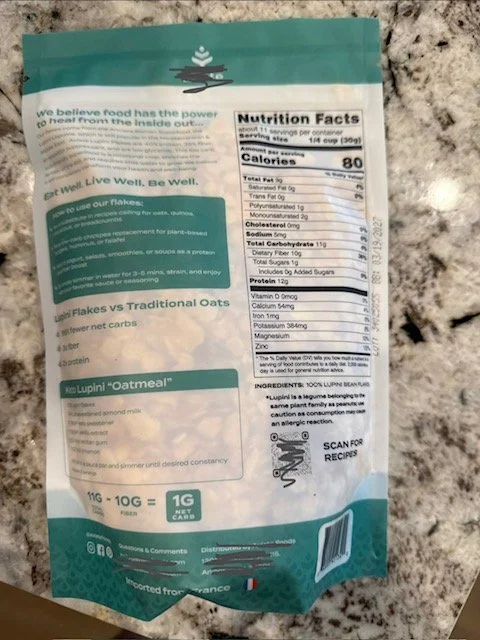
After reading the nutrition facts label, read the ingredient list. The ingredient list is generally on the back of the label under the nutrition facts chart. The ingredients list tells another important story. It breaks down, in order of weight, what is actually inside the food product.
I encourage women to choose products with fewer than ten ingredients (ideally under five). And look for words that are recognizable and can easily be pronounced. Long, scientific names means the ingredient was most likely created in a food chemistry lab as a processed food, which is unnatural and our bodies have difficulty processing it. Also, phrases like “natural flavors” can hide long chemical mixtures that don’t add beneficial nutrients, just more engineered taste that often gets our taste buds and brain hooked on the product due to neural pathways that work similarly to illicit drug use.
Also, be on the lookout for other processed ingredients, not just the ones with chemical-sounding names. When you see “wheat flour,” “enriched flour,” or “bleached flour,” that usually signals a refined flour that has lost much of the fiber and nutrition content your hormones, gut, brain and cardiovascular system need during the aging process (which starts at birth, by the way).
Managing Your Health Journey With Family & Grandchildren
Food choice goes beyond the actual selection of the food itself. As a certified health coach who is trained to successfully help women with lasting positive behavior change and healthy habit development, mindset shift and relationship management is as much part of any health journey as nutrition. This is a key piece of sustainable change that is too often missed.
“...mindset shift and relationship management is as much part of any health journey as nutrition.”
Real life, of course, is full of pressure, triggers and temptations. Many grandmothers tell me how hard it is to say “no” when grandchildren beg for brightly colored boxes with cartoons and movie characters on the front. Husbands may roll their eyes at “healthy food” or insist they don’t want to change. When cooking for family and dining together, that can create challenges for your own health journey – but with the right kind of mindset and preparedness, you can thrive and still maintain these important relationships.
Family Dynamics
When there is pressure or pushback from family about food selection in the home, I invite clients to respond gently but firmly. Read the label together, look at the serving size, saturated fat, sugar, fiber and ingredients list, and then decide what truly serves the whole family’s health. Sometimes that means enjoying a treat occasionally—and sometimes it means finding a similar option with a shorter ingredient list and less sugar or saturated fat.
Progress, Not Perfection
Most importantly, checking labels is not about chasing perfect choices; it’s about becoming a more informed, discerning consumer. At Second Youth Wellness, I remind women that the health journey is about grace and progress, not perfection—learning to build consistent, nourishing habits in the middle of real life, not living under guilt when a family member brings home junk food or after a fast-food drive-thru dinner at the end of a busy day.
Each day is a new start, one which gives you the opportunity to keep building meaningful healthy habits. And when you stay consistent, amazing improvements can happen for your health!
Empower Yourself with Aligned Support
So often, people just want to know what to eat that’s healthy. They want to take more control of their specific health issues with diet and lifestyle, but they don’t know where to start or how to stay on track. Many times they want well-qualified support because they feel lost, alone and overwhelmed without answers. More often than not, women in particular feel like they are the only one in the household who wants to eat healthfully. Having knowledgeable support and practical strategies can make all the difference.
My role as a coach is to help you navigate social pressure, family resistance, and temptations with confidence so you can show up for your calling, your people, and the life you’re meant to live–strong, clear-headed and fully present.
Eating well isn’t about perfection. It’s about becoming an informed, confident woman who thinks about label reading as self-care, not self-criticism or restriction. Being a wise consumer can help you become a healthier version of your best self!
Get a FREE Printable!
Now, if you’re ready to take more control of your health and want a FREE kick-start to getting organized, CLICK HERE to get my FREE planner pages! These are the exact tools I have used for decades that help me stay on track and not have to recreate the wheel every day. Get yours today!
3 Coach Tips for Confidently Handling Resistance & Pressure at Home To Help You Live Well
-
Instead of framing changes as “my diet” or “my rules,” invite the family into a simple shared standard:
“In our house, everyday foods are lower in added sugar and have ingredients we can pronounce. Weekend treats can be different.”
Offer 2–3 options that fit your label guidelines, and let kids or grandkids choose between them (e.g., two cereals or snacks that meet your sugar/ingredient targets).
For a reluctant spouse, ask, “If we could find versions of your favorites with less sugar and better ingredients, would you be open to trying them?” Then use the label criteria together in the grocery store.
Goal: Reduce conflict by turning it into a shared adventure rather than a one-sided rule.
-
Marketing is powerful (especially cartoon-emblazened packages), so make it easy to say “yes” without abandoning your values:
Before shopping, make a “Grandma’s Yes List”: a few ready-made snacks that meet your sugar/fat/ingredient standards.
At the store, acknowledge their request: “That box looks fun! Let’s see if we can find a fun one on Grandma’s Yes List.” Then redirect to a similar item with better numbers.
Keep a special “grandkid shelf” at home stocked with your pre-approved options so you’re not deciding in the heat of the moment.
Create special kid-appealing names for healthful foods like “grow food,” “green machine smoothie,” “berry-licious parfait” or “smart snacks.” Creative names sound less intimidating and more fun to young people.
Goal: Protect your health and theirs while still being the “fun” grandma who says yes—just to better choices.
-
When a partner doesn’t want to change, you can stay gentle and factual:
In the store or at home, read the label out loud together: “One serving has X grams of saturated fat and Y grams of added sugar. We usually eat two servings, so that’s really double. How do you feel about that?”
Suggest small swaps: “What if we kept your favorite brand, but we also tried this similar one that has less sugar and fewer ingredients, and see which you actually like better?”
Set boundaries that honor your goals: “I’m working on my health, so I’d like to keep certain foods out of the pantry. If you really want them, could we keep them in a specific spot that I don’t see as often?”
Goal: Preserve the relationship while clearly protecting your own health journey.
Resources You’ll Love:
My favorite products - check out the list of things I use at home all the time!
Services - browse the options to work with me and find what fits your unique life!
Resources - find some evidence-based products, books and more on my Resources page!
***